


DramaKiss: Short Drama & Reels
TRANSPORT HOSPITAL GAME
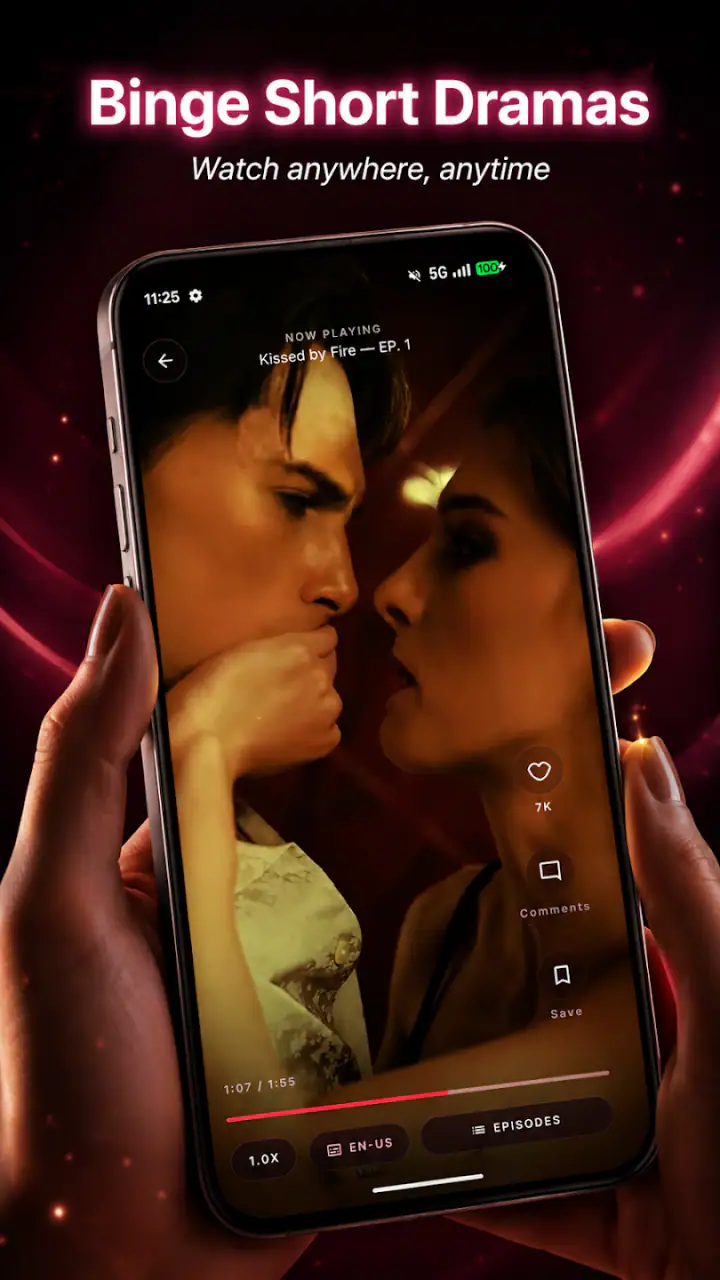
I opened DramaKiss expecting a quick way to fill a few spare minutes, and that is exactly where this entertainment app makes the most sense. It focuses on short-form drama and romance stories, arranged so you can watch an episode without committing to a full-length film or a long television season. My first impression was that it is built around immediacy: choose a story, watch a compact chapter, and decide whether the next one has earned your attention.
That simple format is useful when you are waiting for a bus, taking a short break, or winding down before bed. It is less suitable if you want carefully paced cinema, deep character development, or a single uninterrupted story that lasts an hour or more. The appeal is not subtlety; it is momentum. Episodes are designed to encourage one-more-watch behavior, and the romance and conflict usually arrive quickly rather than developing slowly.
What the first viewing experience feels like
The app belongs to the entertainment category and is published by TRANSPORT HOSPITAL GAME. It is free to install, with optional purchases listed from $2.99 to $54.99 per item. That combination makes the first visit easy to try, but it also means I would approach the viewing flow with a little discipline. I would sample several episodes before spending anything, especially because short dramas can make a strong first impression without proving that the whole series will stay interesting.
The audience rating is around 4.2 from roughly 1.4 thousand ratings, while the app has passed one million installs. Those figures suggest that the format has found a sizable audience, but they do not tell me whether every story will match my taste. With this kind of app, personal preference matters more than popularity. Someone who enjoys dramatic misunderstandings, sudden reveals, and romantic tension may settle in quickly; someone who dislikes cliffhangers may find the same structure tiring.
The content rating is Teen, so I would not treat it as a children’s viewing app. That does not automatically make every story unsuitable for every teenager, but it is a useful reminder to consider the tone before handing the phone to a younger viewer. I also prefer to watch with headphones in shared spaces, because dramatic dialogue and emotionally intense scenes can be awkward when they start unexpectedly.
Related News

Why WhatsApp Messenger Still Makes Everyday Communication Feel Easy

Jurassic World: The Game Is the Better Dino Tycoon for Strategic Players

Threads in Real Life: Who Should Join, Lurk, or Leave

How SHEIN Turned Shopping Into an Endless Content Feed

How to Make Fortnite Feel Smarter on Mobile

Should You Switch to Microsoft Outlook on Mobile?
One practical difference from a normal streaming service is the scale of the commitment. A traditional series asks you to remember a larger cast, several plot threads, and longer pauses between important moments. Here, the story is compressed. A character may reveal a secret quickly, a relationship can change within a few scenes, and the ending of an episode may be designed mainly to pull me into the next one.
That makes DramaKiss a good companion for fragmented time. I can watch a chapter while waiting for an appointment and stop without losing an entire evening. The trade-off is that the writing may feel more direct and heightened than the drama I would choose for a serious movie night. I see it as a snack-sized viewing app rather than a replacement for every other screen entertainment option.
Who will enjoy it most
I would recommend trying it if you like romance mini-series, quick emotional payoffs, and stories that move from one turning point to another without much delay. It may also suit viewers who have trouble choosing a long show because the smaller episode format lowers the risk of wasting time. You can test the mood of a story quickly and leave if the characters or premise do not work for you.
Gallery
I would be more cautious if you prefer realistic dialogue, slow-burn relationships, or tightly resolved episodes. Short drama often relies on heightened situations, so viewers looking for quiet naturalism may feel that the app pushes conflict too hard. It is also not the best choice for someone who wants a broad general entertainment library with documentaries, live programming, or major feature films. Its identity is much narrower and more focused.
Getting started without overthinking the setup
The app supports devices running Android 7.0 or later, which covers a wide range of Android phones and tablets. After installing it, my advice is to begin with a stable connection and a few uninterrupted minutes rather than opening it in the middle of a rushed task. Short episodes are convenient, but the first useful session is easier when you can pay attention to the story and notice how the viewing flow works.
I would start by browsing the available drama and romance choices instead of immediately committing to the first title shown. The goal is not to build a perfect watchlist; it is to identify the kind of story that fits your mood. If I want something light, I look for a premise that sounds playful or relationship-focused. If I want stronger tension, I choose a story that clearly signals secrets, rivalry, or an emotional obstacle.
A small but useful habit is to remember the title and the last plot point before closing the app. Short episodes can blur together when you sample several series in one sitting. I find it easier to keep one main story active and use other titles only as backups. This also gives the first series a fair chance, because switching constantly can make every plot feel confusing even when the individual episodes are easy to follow.
Because the app is free to install but includes optional purchases, I would inspect what the screen is asking me to do before tapping quickly through it. A button that advances viewing may not always mean the same thing as a button that opens a purchase. I do not assume that every interruption requires payment, and I do not spend simply because a cliffhanger has created urgency. Waiting a moment to read the available choices is the easiest way to stay in control.
The current version is 1.0.5. I would keep the app updated through the normal app-store process, particularly if the viewing experience behaves differently after installation or if a screen does not respond as expected. I would also avoid judging the entire service during the first few seconds of loading. Short-form video apps can feel very different once the first episode has actually started.
Your first meaningful success: finishing one episode
For a first-time user, I would define success simply: find one story that holds your attention through a complete episode and understand how to continue or stop. That is more useful than opening many titles and remembering none of them. Choose a series whose premise is immediately clear, watch the first chapter with sound, and pay attention to whether the pacing feels exciting or merely hurried.
While watching, I look for three things. First, can I understand who the main characters are without repeatedly rewinding? Second, does the short format create genuine momentum, or does it just cut away at random moments? Third, do I want to know what happens next for a reason beyond the episode ending suddenly? Those questions help separate a story I actually enjoy from one that is only using a cliffhanger effectively.
If the first title does not work, I would not conclude that the whole app is unsuitable. Short drama collections can vary widely in tone. Give one or two different premises a fair test, but do not force yourself through a story you already dislike. The advantage of a compact format is that changing direction does not cost as much time as abandoning a full-length series.
A realistic everyday routine would be watching one episode during a lunch break, then stopping before the next chapter begins. That boundary matters because the app’s strongest design appeal is also its main temptation: once a story ends at a tense moment, continuing feels effortless. I find that setting a personal limit before pressing play keeps the experience relaxing instead of turning a short break into an unexpectedly long session.
Another useful approach is to use the app as a mood-based rotation. I might keep one romance story for quiet evenings and another more dramatic option for short daytime breaks. I would not try to follow too many series at once, because remembering names, relationships, and unresolved conflicts becomes harder when every episode is brief. One active story plus one alternative is a manageable balance.
Where new users can become confused
The biggest potential confusion is the relationship between free viewing and optional purchases. A free app can still place paid choices inside the viewing journey, so I would treat every purchase prompt as a decision rather than as a normal step in watching. If I am unsure, I pause and read the wording carefully. This is especially important when an episode ends at an emotional peak, because urgency can make a paid option feel more necessary than it really is.
The listed purchase range runs from a few dollars to more than fifty dollars per item. I would regard the higher end as a serious spending decision, not as a casual add-on. My practical rule is to try the free experience first, decide whether I genuinely like the stories, and only then consider whether any paid access provides enough value for my viewing habits. If I watch occasionally, paying may make less sense than simply using the app when free options suit me.
Another source of confusion is the difference between a short episode and a complete story. A compact chapter may deliver a scene, reveal, or twist without providing closure. That is normal for serialized drama, but it can be disappointing if you expected each viewing to feel like a self-contained mini-film. I recommend starting with the expectation that you are entering a continuing series, not buying a collection of independent endings.
The app’s romance focus can also make the tone seem more uniform than it really is. Romance may be the central thread, but the surrounding conflict can change from story to story. I would judge each title by its characters and pacing rather than assuming that one enjoyable series guarantees the next will feel the same. Sampling is part of using this kind of catalog well.
Short-form storytelling creates a specific viewing problem: details can arrive quickly. If I watch while answering messages or moving between tasks, I may miss a relationship change and then blame the story for being unclear. For the first episode, I would give it my full attention. After learning the style, I can decide whether background viewing works for me, but I would not assume that it does from the beginning.
There is also a difference between the app’s store identity and what a viewer personally wants. The short description is simply “DramaKiss,” while the broader promise centers on short drama reels and romance mini-series. I would use the app for that focused purpose rather than expecting a large, mixed-content entertainment platform. If my priority is music, sports, long movies, or children’s programming, a more specialized alternative would probably serve me better.
How it compares with ordinary streaming choices
Compared with a conventional streaming service, DramaKiss offers a lower time barrier. I do not need to reserve a whole evening or remember where I am in a long film. That is its clearest strength. The compromise is breadth and depth: a mainstream service usually gives me more genres and longer productions, while this app concentrates on brief, emotionally driven episodes.
Compared with social-video feeds, it offers a more intentional story path. A general feed can provide endless variety, but it often sends me from one unrelated clip to another. Here, the appeal is following a continuing relationship or conflict. That continuity gives my viewing more direction, although it also means I may feel pressure to continue when an episode stops at a dramatic moment.
Compared with reading romance fiction, the app is quicker to start and more visual, but it gives me less control over the pace. A book lets me pause on a scene, imagine the characters, and move forward at my own speed. DramaKiss delivers the performances and editing for me, which is convenient when I want passive entertainment. Readers who prefer internal monologue and detailed world-building may find the short video format too compressed.
Compared with free video platforms, the experience is more focused on serialized drama rather than a broad mix of clips. The advantage is that I can arrive with a clearer expectation. The disadvantage is that I have fewer reasons to open the app if I am not in the mood for romance or dramatic storytelling. This is a focused tool, not an all-purpose answer to boredom.
Small habits that make the app work better
My first tip is to treat the opening episode as a test, not a promise. Watch for whether the characters are easy to distinguish, whether the conflict feels engaging, and whether the pacing suits the amount of attention you can give. If the story feels rushed in a way that irritates you, another title may be a better use of your time than forcing yourself to continue.
My second tip is to separate discovery from commitment. During the first session, sample enough to understand the range of stories, but once I choose a favorite, I stop browsing and follow that one. This reduces the mental clutter created by several simultaneous cliffhangers. It also makes the app feel more like a series destination and less like an endless decision screen.
My third tip is to make a spending boundary before a purchase prompt appears. I would decide whether I am only using free viewing or whether I have a small entertainment budget for this app. That decision is easier when I am not reacting to a sudden reveal. Since individual purchases can reach a substantial amount, a pre-set limit is more useful than relying on willpower in the moment.
A fourth insight is that the best viewing environment depends on the episode’s role in your day. For a quick break, one chapter is enough. For an evening session, headphones and a comfortable seat make the emotional pacing more enjoyable. For background use, I would choose only after I understand the plot, because missing a brief exchange can make the next episode harder to follow.
Finally, I would judge value by completed stories or genuinely enjoyable viewing time, not by how many episodes autoplay or how quickly I reach the next cliffhanger. The app is successful when it gives me a satisfying short escape. It is less successful if it turns every spare moment into an automatic continuation that I did not consciously choose.
Who should skip it
I would skip DramaKiss if I am looking for a serious film library, documentary coverage, live events, or a children’s entertainment service. The Teen rating alone is enough reason for parents to review the app before allowing unsupervised use. I would also look elsewhere if I strongly dislike romance-centered plots, heightened emotional conflict, or stories that divide their narrative into many brief chapters.
Someone with limited mobile data should also think about when and where to watch. I would use a reliable connection and avoid starting an episode when I cannot comfortably finish it. The app’s short format helps with time, but it does not automatically make video consumption light on connectivity or attention. Those practical limits matter more than the fact that installation costs nothing.
Likewise, viewers who want a guaranteed complete ending in every sitting may become frustrated. The format is built around continuing stories, so a dramatic stopping point is part of the experience. If that structure feels manipulative rather than entertaining, a standalone movie or completed television episode will likely be a better match.
My recommendation after settling into the routine
After using it as a short-form drama destination, I see DramaKiss as a convenient niche app rather than a universal streaming replacement. Its best quality is the ease of starting: I can choose a romance or dramatic story, watch a compact chapter, and decide quickly whether it deserves more of my time. That is genuinely useful for busy days and casual viewing.
Its limitations are equally clear. The compressed storytelling may not satisfy viewers who want patient development, and the presence of optional purchases means I would stay alert around locked or paid viewing choices. The app also asks me to accept cliffhangers and a focused genre selection. Those are not flaws for the right audience, but they are important trade-offs before installing.
The app is free to try, supports Android 7.0 and later, and is currently at version 1.0.5. I would begin with one title, watch its first episode attentively, and decide based on the actual pacing rather than the promise of endless episodes. If the first meaningful success is finding a story I want to return to without feeling pushed, the app has done its job.
My final advice is simple: use it deliberately. Pick a story that matches your mood, give the first chapter your full attention, and set a stopping point before the next cliffhanger arrives. For viewers who enjoy fast romance drama and want entertainment in small portions, DramaKiss can become an easy daily habit. For everyone else, especially people seeking broad content or complete standalone viewing, a traditional streaming service or another genre-focused option will probably be the better choice.
FAQs for DramaKiss: Short Drama & Reels
What is DramaKiss: Short Drama & Reels?
DramaKiss: Short Drama & Reels is a mobile entertainment app focused on short-form dramatic stories, serialized episodes, and reel-style videos. Content is generally designed for quick viewing sessions, with emotionally intense plots, romance, suspense, and cliffhangers encouraging users to continue watching. The exact catalog, episode length, and available features may vary depending on your region, device, and app version.
Is DramaKiss: Short Drama & Reels free to download and use?
The app may be available to download without an upfront charge, but that does not necessarily mean every episode or feature is free. Some content can require in-app purchases, virtual coins, subscriptions, advertisements, or other viewing limits. Before watching extensively, check the pricing information shown inside the app and review the payment confirmation carefully, particularly if the service offers automatic subscription renewal.
Does DramaKiss require an internet connection?
DramaKiss is primarily intended for online streaming, so a stable internet connection is normally needed to browse the catalog and play episodes or reels. Watching over mobile data may consume a considerable amount depending on video quality and viewing time. If the app provides downloads for offline viewing, availability may depend on the title, account status, location, and current version, so users should not assume that all videos can be saved.
What type of content can I expect on DramaKiss?
The app is aimed at viewers who enjoy short, fast-paced dramas rather than traditional full-length television episodes. Stories may include romance, family conflict, revenge, secrets, relationship problems, and suspense, often presented through brief episodes ending with a hook. Because themes and maturity levels can differ between productions, it is advisable to read the title information and use available parental controls before allowing younger viewers to watch.
Is DramaKiss safe to use, and what should I check before downloading it?
As with any streaming platform, download DramaKiss only from the official Google Play Store or Apple App Store and verify the developer name, ratings, recent reviews, and requested permissions. Avoid modified versions or unofficial download links, since they may contain security risks. Also review the privacy policy, account requirements, advertising practices, and subscription terms, and keep your operating system updated for better compatibility and protection.
Pros
- Large library of short dramas for quick entertainment
- Episodes are easy to watch during short breaks
- Frequent updates can bring new stories and series
- Vertical video format feels natural on mobile devices
- Personalized recommendations help discover similar dramas
Cons
- Many episodes may require coins or premium access
- Frequent ads can interrupt the viewing experience
- Some storylines rely heavily on clichés and cliffhangers
- Video quality and subtitles may vary between series
- In-app purchases can become expensive for regular viewers


